
Over the past decade, a fundamental shift has reshaped how cities, suburbs, and real estate investors approach development. The era of single-use zoning—retail here, residential there, offices somewhere else—is yielding to mixed-use development combining retail, office, hospitality, and residential in integrated projects. This shift, initially concentrated in trendy urban neighborhoods, has now spread across suburban markets and secondary cities, including Nashville. Understanding mixed-use development drivers, mechanics, and investment implications is essential for anyone involved in commercial real estate or urban planning.
Why Mixed-Use Development Dominates Today
The ascendance of mixed-use development reflects several converging forces reshaping development economics and consumer preferences:
Retail transformation: Traditional retail—standalone shopping centers, enclosed malls, big-box anchored strips—faces structural headwinds. E-commerce captures increasing consumer spending, landlords face higher vacancy, and retail-only developments struggle for financial viability. Mixed-use solutions, integrating retail at ground level with captive residential and office above, solve this by filling ground-floor space with tenants who actually walk past street-level retail rather than arriving by car.
Walkability and urbanization preference: Demographic research consistently shows preference among millennials and Gen-Z for walkable, mixed-use neighborhoods. Suburban corporate office parks and subdivisions connected only by car attract less capital and talent. Developers responding to these preferences naturally embrace mixed-use models that create the pedestrian activity and neighborhood character these cohorts value.
Regulatory encouragement: Most municipal planning departments now actively encourage or even mandate mixed-use development. Zoning codes have evolved to permit, and sometimes require, ground-floor retail activation in residential projects. Tax incentive programs, TIF (tax increment financing) districts, and development agreements often favor projects incorporating retail, residential, and office. From cities’ perspective, mixed-use development generates more tax revenue per acre than single-use, creates walkable neighborhoods that build civic cohesion, and solves the “dead ground floor” problem plaguing suburban office and residential projects.
Capital efficiency: From developers’ perspective, mixed-use projects maximize land utilization and revenue potential. A 2-acre site developed as retail-only might generate $3-5 million in revenue. The same site with ground-floor retail plus 150 residential units generates $15-30 million depending on market and unit pricing. This capital efficiency has made single-use development economically irrational in many contexts.
Resident and employee preferences: Both residents and office workers increasingly value having shopping, dining, and services within walking distance. Empty ground-floor retail spaces in residential buildings and sterile office parks prove difficult to lease and occupy. Mixed-use solves this by creating the density necessary for services to viably locate.
How Mixed-Use Economics Work
The financial mechanics of mixed-use development explain its prevalence and the investment thesis driving institutional capital deployment:
Revenue stacking: Mixed-use projects generate revenue from multiple sources—retail/office leases, residential rents, parking, potential hotel/hospitality components. A 2-acre mixed-use project might generate:
– Ground floor retail (12,000 sf): $18/sf = $216,000 annually
– Second-floor office (25,000 sf): $16/sf = $400,000 annually
– 150 residential units averaging $1,500/month = $2,700,000 annually
– Parking (200 spaces) at $150/month = $360,000 annually
– Total stabilized NOI: Approximately $3.5-4.0 million annually
A single-use retail or residential project on the same land would generate substantially less and face higher vacancy and marketing costs.
Ground-floor activation: Critically, residential or office buildings with activated (occupied, appealing) ground floor rent and lease at higher rates than those with vacant or dead ground-floor space. A residential unit in a building with thriving ground-floor retail might command $1,600/month; the identical unit above vacant or inactive space might lease at $1,400. This 10-15% residential value premium often exceeds ground-floor retail/office profitability, making mixed-use economically superior even to pure-play residential.
Density and parking requirements: Ground-floor activation also enables developers to justify higher residential density through pedestrian orientation and reduced parking requirements. Many municipal codes allow reduced parking ratios in mixed-use projects where walkability and transit access reduce auto-dependency. This further improves economics by increasing residential density without proportional parking infrastructure cost increases.
Financing availability: Mixed-use projects, particularly those combining residential with retail and office, access diverse financing sources. Multifamily lenders, commercial real estate lenders, and construction lenders all compete for high-quality mixed-use deals. This competitive financing environment often yields better terms than single-use development faces.
Tenant Mix Considerations: What Works
Not all mixed-use tenant combinations perform equally. Successful projects carefully consider tenant compatibility, traffic patterns, and economic fundamentals:
Strong ground-floor retail and restaurant: The most successful projects integrate ground-floor retail and restaurant use that serves the residential community while attracting broader neighborhood traffic. Pharmacies, grocery/specialty food, coffee shops, casual dining, fitness, and services (salons, dry cleaning) create daily destination traffic. High-end boutiques, tourist-oriented retail, and national chains often underperform in mixed-use contexts unless anchored by strong resident base.
Local ownership emphasis: Projects featuring locally-owned retail and restaurant tenants consistently outperform those dominated by chain retail. This reflects both demographic preferences for authentic, non-corporate experiences and the operational reality that local operators take longer-term perspectives on location, investing in customer relationships rather than hit-and-run location strategies.
Diverse tenant base: Over-dependence on single tenant or retail category creates risk. A project dominated by restaurants becomes over-reliant on dining trends. A project anchored by a single grocery becomes vulnerable if that grocer relocates. Successful projects feature diverse tenant types creating complementary rather than competing traffic patterns.
Complementary timing: Office morning arrivals and business hours create different traffic patterns than residential evening/weekend patterns. Restaurant and retail successfully capture both flows. Late-night uses (bars, entertainment) that extend evening activity are valuable additions where neighborhood character permits.
Office component role: Office space in mixed-use performs best when serving local services, professional services, and small-to-medium businesses rather than corporate back-office or administrative functions. Dental offices, accounting firms, design studios, and professional services generate daytime activity and client foot traffic that retail benefits from.
Investment Thesis and Performance
Institutional investors have embraced mixed-use development for clear financial reasons:
Blended cap rates: A mixed-use project combining residential, office, and retail components delivers blended cap rates of approximately 5.0-6.0%, between pure multifamily (4.0-5.0%) and pure retail/office (6.0-7.5%). This blended return improves from single-use returns through risk mitigation—diversified income sources reduce single-tenant or single-sector risk.
Upside exposure: Mixed-use projects offer exposure to multiple value drivers. If residential appreciation accelerates, residential components outperform. If commercial real estate rebounds, office and retail components appreciate. This diversification serves as a hedge reducing reliance on single-sector trends.
Rezoning optionality: Land positioned for mixed-use development with rezoning approval contains inherent optionality. If residential weakness emerges, projects can shift toward retail/office balance. If commercial challenges persist, residential can expand. This flexibility reduces downside risk relative to single-use projects locked into specific use cases.
Demographic tailwinds: Younger demographic cohorts’ demonstrated preference for walkable, mixed-use neighborhoods has driven capital toward these projects. Institutional investors anticipate this preference will persist as millennials and Gen-Z continue household formation and move into higher-earning years.
Challenges and Risks
Mixed-use development, despite its prevalence, faces real challenges investors must understand:
Complexity and execution risk: Mixed-use projects involve multiple disciplines—residential development, retail management, office leasing—requiring sophisticated operating partners. A retail component failing to lease requires active management, potentially additional marketing capital, and tenant support that residential-only operators don’t typically provide. Execution mistakes compound across multiple sectors.
Ground-floor retail weakness: Despite mixed-use’s logic, ground-floor retail in many mixed-use projects underperforms expectations. Retail vacancy rates exceed residential, rents underperform projections, and retail tenants prove harder to retain. Successful projects often underwrite ground-floor retail conservatively, recognizing that activated, profitable ground floor requires more than simply providing space.
Residential-retail friction: Residential tenants and retail tenants can create operational challenges. Noise, hours of operation, parking conflicts, and maintenance issues create friction that property managers must actively manage. Projects that don’t anticipate these challenges see reduced residential satisfaction and retention.
Regulatory and approval complexity: Mixed-use projects often require more complex entitlements and regulatory approvals than single-use projects. Zoning variances, mixed-use approval processes, and neighborhood negotiations extend development timelines and increase costs. Developers must budget additional legal, planning, and engagement costs.
Economic cyclicality: While mixed-use diversification provides hedging benefits, economic downturns affect all components. Residential rents soften, retail tenants fail, office vacancy rises. During recessions, the diversification benefit proves less valuable as all components cycle together.
Mixed-Use Boom in Nashville
Nashville’s mixed-use development landscape mirrors national trends:
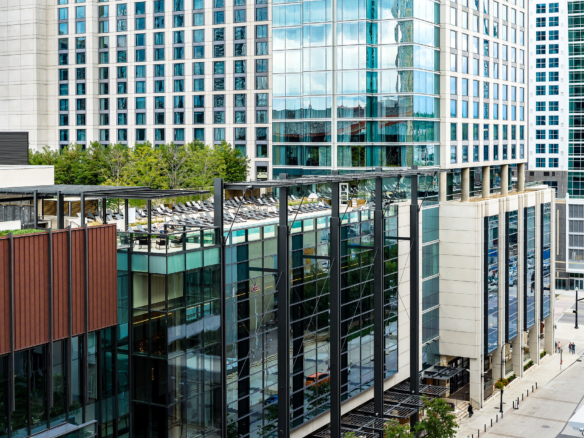
WeHo, Charlotte Pike, and Wedgewood: Major mixed-use projects across these corridors combine creative office, retail/restaurant, and residential components. Projects like ENTER Nashville, Maple Hall, and Charlotte Pike mixed-use developments combine ground-floor activation with 100+ unit residential components.
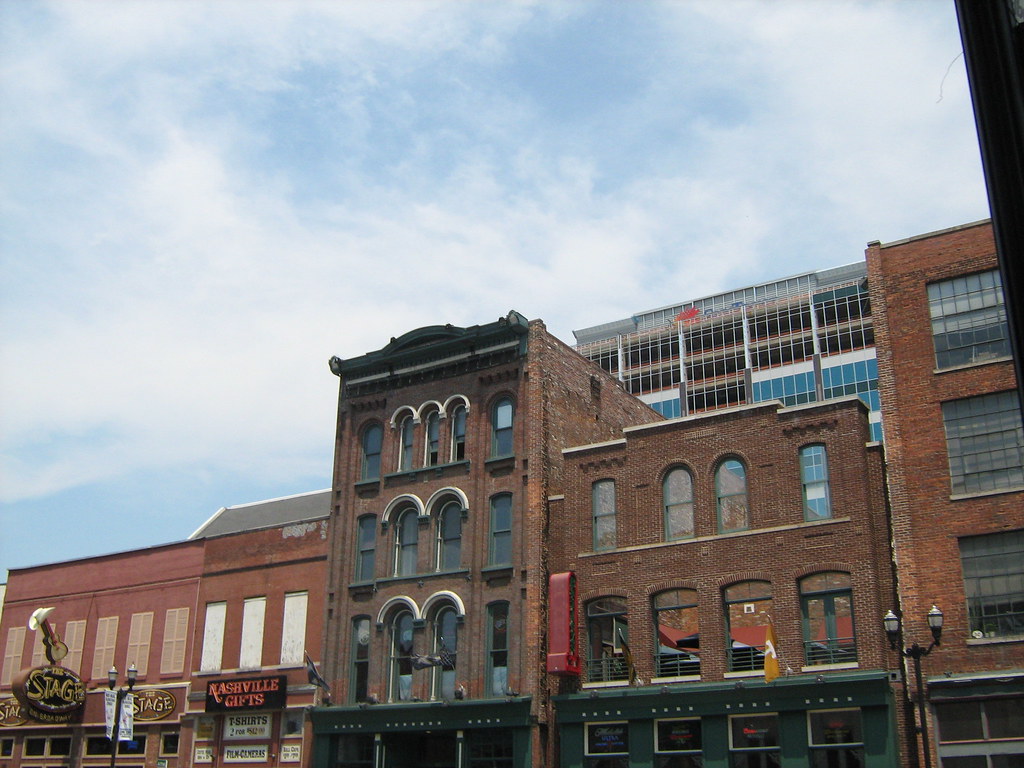
Downtown Nashville: The downtown market features extensive mixed-use conversion of historic office and retail buildings into residential lofts with ground-floor retail and restaurant activation. This pattern—adaptive reuse mixed-use—has driven downtown’s residential boom while revitalizing street-level commerce.
Suburban Nashville: Even suburban Nashville increasingly embraces mixed-use zoning, with communities like Brentwood and Franklin updating codes to encourage mixed-use development in town centers and commercial corridors.
Investor activity: National institutional investors, including major multifamily REITs and mixed-use development companies, have announced Nashville projects or acquisitions. This capital flows toward projects combining residential dominance with proven retail activation and strong neighborhood positioning.
What Mixed-Use Means for Nashville’s Future
For Nashville specifically, mixed-use development acceleration has several implications:
Residential growth will increasingly concentrate in walkable, mixed-use neighborhoods rather than traditional suburban subdivisions. East Nashville, Wedgewood-Houston, Charlotte Pike, and Nolensville Pike will continue attracting residential capital toward mixed-use contexts.
Ground-floor retail will become increasingly valuable and competed for. Successful mixed-use projects will feature curation of ground-floor retail ensuring authentic, community-serving uses. Ground-floor retail in mediocre mixed-use projects will remain challenging.
Real estate investors and developers must develop multi-disciplinary expertise. Success requires understanding residential leasing, retail management, office dynamics, and local market nuances simultaneously. Specialists in single disciplines must partner with complementary expertise.
Zoning and regulatory frameworks will continue evolving to encourage mixed-use. Nashville municipalities will update codes, revise parking requirements, and create incentives for mixed-use development.
Conclusion
Mixed-use development has evolved from trendy urban concept to dominant development template reshaping real estate across markets of all sizes. The drivers—retail transformation, walkability preferences, regulatory encouragement, and capital efficiency—remain structural and powerful. While mixed-use projects face genuine execution challenges and retail-specific headwinds, the trend toward integrated development combining residential, commercial, and office components will almost certainly continue.
For investors, developers, and communities, understanding mixed-use dynamics, tenant mix implications, and economic drivers provides essential context for navigating the next development wave. Nashville’s own trajectory toward mixed-use-oriented growth mirrors this national pattern, creating both opportunities and challenges for market participants.
Interested in understanding mixed-use development opportunities in Nashville? Third Coast Real Estate’s commercial and residential specialists work with developers, investors, and communities on mixed-use strategy, asset acquisition, and market positioning. Contact us at 615-249-8076 to discuss mixed-use opportunities in Nashville’s most dynamic corridors.


Join The Discussion